• Skip to primary navigation
  • Skip to main content

Careers Advice Online

What work is for you?

  • Home
  • Free Resources
  • Dream Career Finder
  • Reviews
  • Pricing
  • Job Interviews
  • Career Change Advice
  • Blog
  • About
  • Contact
  • Show Search
Hide Search

Search Results for: career change statistics

Job Interview Questions

Here is a list of some of the more challenging job interview questions you are likely to face.

Depending on where you live, some of the questions near the bottom of the page may not be politically correct or may, in fact, be in breach of local privacy and employment laws, however, that doesn’t mean they won’t be asked.

Have a think about how you would respond if some of these more difficult job interview questions were asked.

For further job interview advice, please see my job interview tips page.

Job Interview Questions Relating to You And The Employer

  1. How do you think you can benefit this organization.
  2. Why do you want to work in this industry?
  3. Why do you want to work for us?
  4. Why should I hire you rather than someone else?
  5. What are your salary expectations?

For answers to these job interview questions, please see my job interview answers page.

Interview Questions Relating to Your Past

  1. Tell me about your previous experience and training in this industry.
  2. Why aren’t you happy in your current position?
  3. Is your current employee aware that you are looking for a new job?
  4. What makes you think you will be happy if you go through a career change?
  5. What would you say your greatest strengths and weaknesses are?
  6. Of the bosses, you have had in the past, which one did you like working for the least? Why?

Job Interview Questions Relating to Past Employment

  1. Can you please provide me with names and contact details of your last three employers?
  2. It is our company policy to have discussions with your last three employers in the form of reference checks. Are you happy with this and are you willing to sign an agreement for us to go ahead and do this?
  3. What would your previous employer say about the way you get along with work colleagues?
  4. What would your previous employer say about the way you accept instructions and directives?
  5. What would your previous employer say about the way you plan your work and meet deadlines?
  6. Have you ever had any supervisory role? Tell me about this.
  7. What problems did you have in this role and how did you overcome them?
  8. How did you obtain your current job?
  9. What do you like most about your current job?
  10. What do you like least about your current job?
  11. What are the main problems you face in your current position?
  12. What would you say is your greatest contribution to your current job?
  13. How much do you currently get paid?
  14. How did you obtain your next previous position?
  15. What did you like most about this position?
  16. What did you like least about this position?
  17. What were the main problems you face in this position?
  18. What would you say with your greatest contribution in this position?
  19. Have you ever been sacked or asked to resign?
  20. Why have you had so many jobs over the past few years?
  21. Why did you leave each of them?
  22. Have you ever been unemployed?
  23. What were you doing during this period of unemployment?
  24. Do you have some examples of previous projects/achievements in past employment?
  25. How many days have you been away from work in the last two years? [Except holidays]

For answers to these job interview questions, please see my job interview answers page

Questions Relating to Your Future

  1. What would you like to be doing in five years from now?
    In 10 years?
  2. If money or education or background were not barriers to employment, what would you choose as your dream career?
  3. What type of people do you prefer to work with?
  4. What attributes do you desire in your future employer/boss?
  5. Are you willing to work nights and weekends if required?
  6. How many hours per week are you willing to work?
  7. How much do you expect to be earning in five years from now?

Job Interview Questions Relating to Personal Issues

  1. What are your non-work pursuits/interests?
  2. What well-known personalities do you admire? Why?
  3. What type of material do you read? What books have you read in the last 12 months?
  4. What is the state of your health?
  5. Do you smoke/drink? How much?
  6. What are your partners/wife/husband feelings towards your work?
  7. Do you own your own home/car?
  8. How would you describe your current financial position?
  9. Have you ever been arrested?
  10. Have you ever been separated/divorced?
  11. How did you cope with this?
  12. Who raised you?
  13. Are your parents still alive?
  14. Which of your mother or father had greatest influence over you?
  15. How would you describe your relationship with your mother?
  16. How would you describe your relationship with your father?
  17. How many brothers and sisters do you have?
  18. What is your marital status?
  19. Are you willing to discuss the circumstances surrounding your divorce/separation?
  20. How did this affect your work?
  21. Why did your marriage/relationship breakup?
  22. How would you describe your spouse/partner?
  23. How did you meet your spouse/partner?
  24. Explain what domestic problems you have faced and the way you handled them?
  25. If not married/in a relationship, what are your intentions regarding this in the future?

For answers to these job interview questions, please see my job interview answers page

Doing important things too quickly can lead to disastrous results.

Watch video

https://www.youtube.com/watch?v=3DKDaSd-4nY

If you are ready to spend a little time working out what you are meant to be doing with your work-life, then I know of no better way to do that than to complete the Dream Career Finder project.

It has helped many people discover accurately what type of work they should be doing.

It will probably take a few hours for most people.

But is a few hours a long time if it helps you discover what you should be doing with your life?

Download and begin the Dream Career Finder project now and begin to get some real traction with your career direction.

Top Resume Secrets

Five Widely Unknown Resume Secrets to Improve Your Interview Hit Rate

  • Include Third Party Employer Comments in Your Resume
  • Include Company Logos and Company Descriptions in the ‘Work Experience” Sections
  • Match the Top 4 to 5 Skills from the Job Advertisement to the First Half of Page One of Your Resume 
  • Write Your Resume Firstly for the Human Eye and Secondly for Applicant Tracking Systems
  • Send Both a Hard Copy & Digital Copy of your Resume

(you can download my 5 Resume Secrets PDF booklet here)


Secret 1: Include Third Party Employer Comments in Your Resume

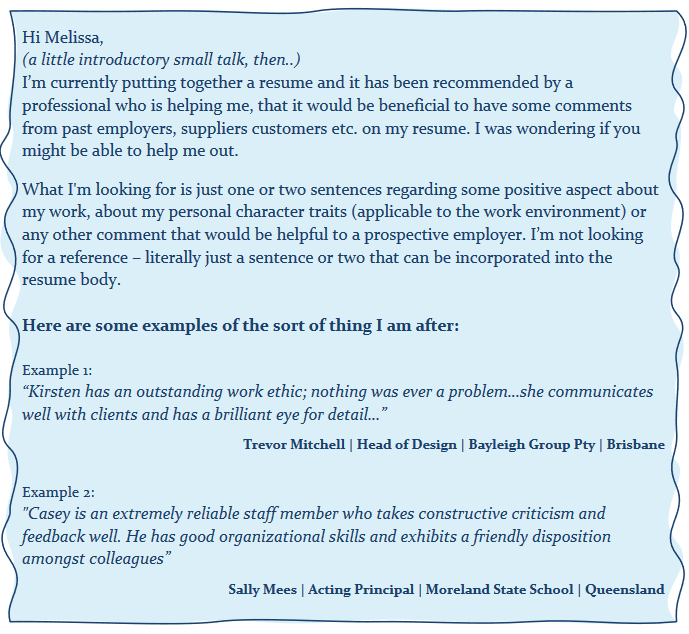
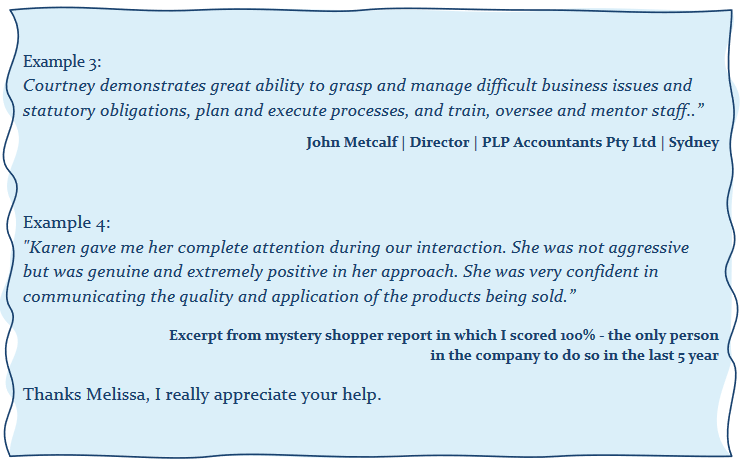
There is great power in obtaining several succinct third-party employer comments, customer comments, client comments, or supplier comments, to insert into your resume.

Employers are much more interested in what other people think about you, but a resume is primarily about what you think about yourself – what you say you have done, how good you think you are, what you think your personal attributes are, etc.

I have spent over 15+ years writing resumes and I have a good understanding of which resumes are more likely to secure interviews.

I rate inserting third-party comments from employers or other authoritative people about some positive aspect of your work (or your character, or a project you worked on, or the customer service you provided, or…fill in the blank) as probably the single most important words appearing on a resume document. These comments have tremendous power in influencing an employer.

Yet it’s ironic that most resumes don’t include these. We all know the power of Google reviews and any other review platforms, and how they influence us greatly when we are deciding to purchase a product or service. It’s no different for an employer. They are also purchasing a product (you) and they want to know what others think about you.

One of the most powerful inputs that will influence their decision to hire you are comments from other people who you have worked for, or worked with – or in some other way are able to provide an informed comment on how you work.

I always include these comments in the top half of the first page.

Now I hear you complaining that this involves too much hard work going back to past bosses to get some comments, or that you don’t have anyone you could ask.

Firstly, you are not looking for a written reference, just a one or two-sentence sound bite (see examples below). Secondly, I’m going to make it easier for you by providing an example that you can copy and paste to send as a text message or email to the person you need to contact. (BTW, this is why I recommend you always listen out for and write down any positive comments, or experiences that could be used on a resume for later use. Any time a boss or colleague or customer or supplier or stakeholder of any sort provides some positive verbal feedback, spoken or implied, write it down and save it into a ‘Resume Comments’ file for later use. They are gold).

Thirdly, yes it involves a bit more work but that’s why you do it – because no one else is doing it! And it will you the edge. They can have a tremendous impact on the prospective employer. Many activities in a job search are about doing those difficult (although not too difficult) things that no one else is willing to do.

Successful people are just average people who are willing to do the things that unsuccessful people won’t do.

Below is an example of what you could send and some examples of the types of comments you are looking to have come back to you. It could be worth trying to touch base with a phone call before you send this out to let them know what you are after and state that you will send them some details, including examples, to try to make it easy for them.

Also having these two touch points instead of one (phone and email/text) also increases the chances they will take action for you, but you may still need to chase them up.

Change the details below to fit your circumstances:

Secret 2: Include Company Logos and Company Description in the ‘Work Experience’ Sections

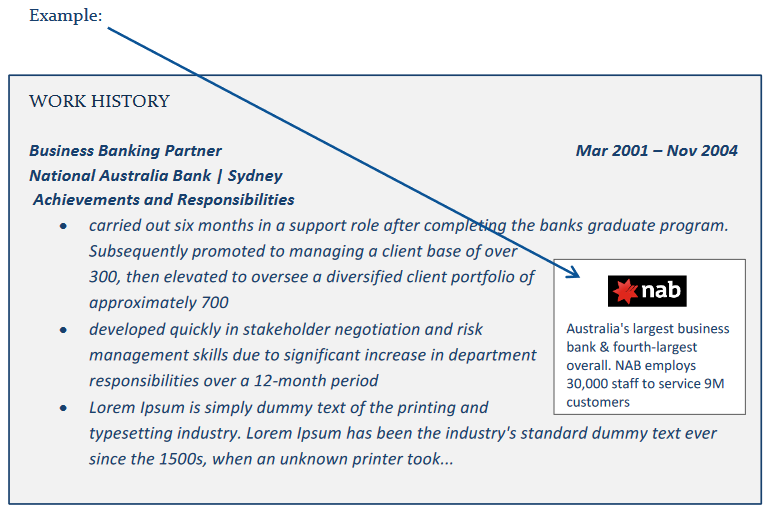
Why include a company logo of the organization you have previously worked for?

There are a few reasons for this:

The first is because your resume is fundamentally a personal marketing document. One of the first rules of marketing is to stand out from the crowd. And when it comes to job search applications and the hundreds of resumes that are often submitted for each job, standing out from the crowd is critical. When writing a resume, this question should always be at the forefront of your mind:

 “How can I make my resume more interesting to the reader when I know they are going to be swamped with large volumes of resumes?”

Of course, with the extensive use of applicant tracking systems these days, a high number of resumes will not even be seen by the human eye. But right now, we are focusing on when your resume does finally gets read by a human. Visually linking yourself to a brand will generally have a positive influence on the reader. This is truer if the organization you worked for is well-known in the marketplace but even if this is not the case, a logo is valuable on your resume. Businesses spend millions of dollars every year on branding – attempting to buy a piece of the consumer’s mind with a positive message about the company. You can take advantage of this on your resume by implying that “part of your history is connected with this known brand”. The organizations you have previously worked for do not need to be nationals or multinationals. This principle works equally well at a local level where local brands are well-known in the community.

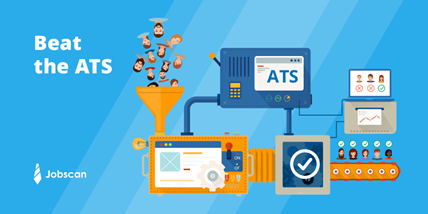
What Are Applicant Tracking Systems?

Applicant tracking systems are used by most large employers and recruiters. An ATS will scan your resume before a human gets to see it. If certain keywords and other criteria are identified in your resume, it will proceed to the next stage of being viewed by a real person. If your resume does not meet the criteria of these algorithms, then it will never be seen by anyone.

The professional logo image adds an aesthetically pleasing aspect to an otherwise ‘black ink, white paper’ reader experience. You may have heard that applicant tracking software (see sidebar) can’t read images. That’s true, but that doesn’t matter at this stage as this is about impressing the human reader, not ATS systems. Having an image in your resume will not penalize you in the ATS scan, it simply means that the image will not be parsed to the ATS database. It is however a good idea to save the text box with the logo and company description as one image. This stops the text description of the company from showing up in the ATS in a location you don’t want it to (ATS reads text from left to right across the page and the text inside the text box will become scrambled by the ATS if the text in the box is not saved as an image). Here is a very short video on how you can save a text box as an image in a Word document.

You can also add logos to the Employer Comments section of your resume (see Secret 1 above) but don’t flood your resume with logos. No more than 4-5. If you can have more logos available than you need, use the ones that are the most recognizable in the marketplace.

Secret 3: Match the Top 4 to 5 Skills from the Job Advertisement to the First Half of Page One on Your Resume

A resume is a bit like a newspaper article. The most important information needs to be at the very beginning (Headline) and the more detailed and slightly less critical information, be disclosed further into the article.

A good way to do this is to read the job description and identify the top four or five requirements the employer is seeking. Then in a very meticulous manner, ensure that each of those key skills is addressed in the first half of page 1 of your resume. This could be stretched to the entire page 1 if necessary but the earlier in the resume, the better. This is because many resumes are only read on page 1. If the employer or recruiter does not find any compelling reasons to read pages 2 and beyond, key information on those pages will not get seen.

This newspaper article-type approach can result in quite a compelling resume from a personal marketing perspective. You have forthrightly and concisely communicated how you are a good match to the key requirements for the job early on in your resume. Employers love this ability to succinctly put your case and save them time. It can be frustrating for employers to be reading a resume while in the back of their mind they are saying “Just give me the facts, I’ve got another 50 to get through.”

Secret 4: Write Your Resume Firstly for the Human Eye and Secondly for Applicant Tracking System

Although a lot of job applications these days do pass through applicant tracking software (see sidebar in no.3) before a real person gets to view it, it’s the real person who is the most important and who will make the final decision. However, it is always a matter of finding the right balance because if you are unable to get your resume through ATS, you needn’t worry about impressing the employer.

I find the best way is to first have an intelligent guess at whether your application will likely be subject to ATS processing or not. If you are applying to a large company or through a recruitment agency, your resume will almost definitely go through applicant tracking software. But suppose you are applying directly to a smaller size company. In that case, chances are your application will be processed in a conventional manner and will be looked at firstly on a computer screen or in hard copy (some employers still print out resumes to read them, particularly when there is a large volume).

You may have read a lot about ATS and how just about all employers are using them. This is not really accurate. It’s important to remember that most workers work for small businesses. 5.4M businesses in America employ up to 20 people, whereas only 650,000 businesses employ over 20. A small percentage of this largest group of employers will be using ATS when employing staff, except where a business has elected to engage a recruiting company to do the hiring for them.

Assess whether your resume is likely to be subject to ATS scanning. If you think it will be, this is what I recommend.

Firstly, write your resume while completely ignoring keywords and other criteria that ATS will assess. Focus entirely on writing your resume in a conventional manner to impress a human being only. Having completed that, go back over it and assess potential ATS requirements using the job advertisement, i.e. include keywords and other synonyms related to skills stated in the advertisement, keywords related to qualifications, keywords related to any software or programs, industry-specific words, etc.

The reason for this two-step approach is that the most important focus needs to be on the human being who will be reading it. An ATS system will not be selecting you for a position. The power of the employer or recruiter in picking the candidate is much more thorough and complex than an ATS system, so your resume needs to put more focus on addressing the reader.

When your resume is finished, you should have a wonderfully crafted personal marketing document that does a great job of selling you to an employer or recruiter. And then secondly that resume must also have enough attention paid to ensuring the correct keywords and other criteria are included to satisfy ATS systems.

Secret 5: Send Both Hard Copy & Digital Copy of the Resume

There are two reasons you should send a hard copy as well as a digital copy of your resume to employers.

The first reason is a marketing one. There is a term in advertising known as frequency. It is widely accepted that increasing the number of times (frequency) an advertisement is displayed will increase the likelihood of somebody taking action and buying a product or service. The main reason for this is that they have simply become more aware of the product or service and are more likely to remember it.

This same principle applies to the job search. There have been many job applicants who have got the job simply because they had kept communicating with a particular organization or person repeatedly (without becoming a nuisance).

By sending a hard copy of your resume as well as your digital one, you have increased your frequency and exposure to the employer.

(For the same reason, I recommend prospective employers try to call the employer/recruiter before submitting a resume to ask an intelligent question or two about the position. Many job advertisements specifically now state your option to do this, but even if they don’t you can still implement this strategy if you are able to find out the decision-maker’s name by carrying out some research on the company. Once again, the sole purpose of this is to increase your exposure to the employer, allow another point of contact, and an opportunity for you to begin to build a relationship).

One of the best ways to send in a hard copy is to buy an inexpensive courier bag (that might cost you about $5) and address it to the decision-maker if you are able to establish who this is. Attach a sticky note with a handwritten message saying something like:

“This resume is a copy of an application I have already sent digitally. I wanted to be absolutely sure my application was received and didn’t disappear into cyberspace, as I am extremely interested in this position.”

(Change any wording to suit your personality and the position being applied for but you must portray a sense of intense desire for the role. Research tells us one of the key criteria that attract employers to prospective employees is their enthusiasm for the job).

The second reason is that you doing something that almost no one else will have done. As mentioned previously, one of the key criteria for successful marketing is to identify and execute strategies that no one else is doing, as this will increase your opportunity to stand out from the crowd. By sending a hard copy you have greatly increased your chance of your resume being read by a real person compared with it being submitted via a job portal, ATS, or email. Keeping in mind that most resumes for job applications submitted via those last three methods do not get read by a human being.

You have just significantly improved the chances of your resume being read by a key decision-maker because it will arrive on his/her desk in a courier bag and personally addressed to them. In most cases that will have an impact.

This strategy is most likely to be successful when applying directly to the employer rather than through an agency, however, it will still probably have some level of success through an agency as the principles outlined above still apply. The only time I wouldn’t use this strategy is if it emphatically states in the advertisement not to apply for this position in any other way except through…. (whichever way they state). In other words, you need to be sure you are not doing something they have categorically told you not to do.

Online IT Degree: Can I Make It Work?

If there is ever a degree that is ideal for studying over the internet, it is surely an online IT degree because the tool you are studying with, is the very same tool you are learning about.
It is no surprise then that IT and computer science degrees online have become popular and increasingly well accepted by employers.

Here are five important considerations for anyone contemplating an online computer science degree or IT degree.

1. IT Degree or Computer Science Degree: Which Do You Want?

There is a difference between the two.
If you pursue a computer science online degree you will be dealing more with the creation and implementation of computer programming.

However with an online IT degree, you won’t be working on the “creation” side of the industry but rather working with already established technology systems, (e.g.) network and communications systems installation and maintenance.

2. IT and Computer Science Degrees Don’t Require Hands-On Training

Some aspects of studying networking and security (security is currently the fastest-growing part of the IT industry) may require a small amount of your physical presence while training.

But other than this, most online IT degrees and computer science degrees will not require you to be physically present.

Online teaching technologies are advancing at such a rate that the gap is rapidly closing between the learning experience in a brick and mortar university and an online University.
However, a senior IT industry contractor that I spoke with recently said that one downfall of the online learning experience can occur when the tutor is not camera savvy.

In a situation where the tutoring has been filmed without an audience, a tutor who is not used to fronting a camera can struggle to communicate effectively.

3. What Will an Employer Think about Your Online IT Degree?

After talking to IT industry professionals, it seems that most employers are far more concerned about how well you know your profession and (something that may surprise) strong interpersonal skills.

Most IT employers, like any business, are actually in the people business.
It is businesses (people) who want the network upgraded.
It is businesses (people) who want a new software program written.
The idea of an IT nerd locked away in a room working on his own for eight hours a day isn’t a very common occurrence.

Interpersonal qualities are more important to employers than whether or not you received your computer science degree online or at a brick and mortar university.

Having said that, you would want to ensure that your online computer science degree is from a recognized and accredited university or training institution.

4. Can You Handle the Lack of People Contact?

If you have a had an interest in computers for a while you’re probably very used to spending long periods of time in front of the screen on your own.

But how would you go extending that screen time to working your way through a comprehensive online IT degree? One IT industry professional I spoke to said that he enjoyed going in-person to a University because of the people contact factor.

It is good to consider whether you think you would miss that physical contact with people.
However whether you are completing your computer science or IT degree online versus a traditional university, the vast majority of your study will still be done on your own anyway.

5. Is It Possible to Realize Your Goal without Completing an Online IT Degree?

Is there another route for you to enter the IT industry?

Are there people who are working in the IT industry who do not have these qualifications; people who have got there by extensive online self-learning and then proving to an IT employer they have the necessary knowledge and skills to do the job. The answer to these questions is nearly always yes.

So this route to an IT career is a possibility.
The question is: are you the type of person who could pull it off?
An IT professional of 40 years said to me once that he usually learned more through Google searches than by attending computer science training.

He went on to say that most people, IT professionals included, don’t know how to use Google and other search engines to their full advantage, something that I found rather surprising.

Most of what you would learn through an online IT degree could probably be accomplished through your own online learning program, including the accessing of free online IT training courses.

For more on this idea, see my career training page.

How To Get A Degree Without Going To College

I know a person who works for JP Morgan who managed to get a degree without going to college.

He got a job as a technical analyst trader, a role that surely requires a degree – doesn’t it?

He did it by getting his own degree.

He became extremely competent at market trading through self-learning (you can learn almost anything with online learning platforms such as LinkedIn Learning, Coursea, Udemy, Youtube, and online universities).

After doing some networking, he arranged a meeting with management personnel at JP Morgan. They were surprised by this man’s knowledge and skills and consequently offered him a job. His boss later commented that his knowledge and expertise in trading were greater than most of the graduates he employs.

According to a Forbes report, 48% of employed college graduates are in jobs that require less than what they are qualified for. Other studies have shown that 50% of college graduates said they would select a different degree if they had the opportunity to choose their education path again.

With this high chance of selecting the wrong college degree, here’s a novel way of being able to apply for jobs that normally require a college degree but without actually going to college.

This approach is not for everyone, but if you aspire to a career that requires a degree, but you either can’t afford it or for some other reason can’t go to college, this alternative approach could be for you.

Large Debt, Poor Job Prospects

As a career counselor, I come across a lot of college students who have recently finished a degree and realize that the piece of paper they have in their hand is not getting them the types of jobs they hoped for.

Many students are walking out of universities these days with a very large debt over their heads and often struggling to find a job.

And in many cases, when they do get a job, the pay rates are less than impressive considering they may have spent $50,000+ studying.

A Creative Approach to Convincing an Employer You Have the Qualifications

So imagine this, you see an advertised* position that requires, for example, a business degree.
You don’t have a business degree but what you have done over the last 1-2 years was to spend a good part of your waking hours diligently completing and logging a self-study program in the business.

*Actually I don’t even recommend you wait for a job advertisement to appear.
Your chances will be even better by simply sending off a resume, cover letter, and your extensive study log and notes as soon as you are ready.
As mentioned above, as part of your home study business degree, you should include intensive research on the main employers within your city who you think you would like to work for.

Let’s say you send your resume and cover letter to the employer, explaining that although you don’t have a degree in business, you have something that you feel is just as valuable if not more so. (One of the problems with studying for a business degree at College is that you are forced to learn a lot of things that may not be pertinent to the job you seek and may not particularly interest you. Conversely, you never get to study some of the specific areas that you may be passionate about).

You explain in your cover letter that for say the last 1 to 2 years, you have been involved in a self-study business program and you briefly outline the areas that you have studied.
Then you enclose a very detailed study log of dates, times, and other details of your business study including online courses, authors, book titles, references, conferences you attended, etc.

For each area you study, you provide a summary of what you learned and found most interesting (this would likely be study outlines that you have already completed for your own use).
As well as your hard copy resume and cover letter, which you send in a large envelope/package, you also include these professionally produced study logs and notes which could amount to 50 pages or more.

Now clearly the employer is not going to read it all.

But you have done a couple of things with your job application that could considerably improve your chances of landing an interview, such as:

You have stood out from the crowd.

You have gained the attention of the decision-makers. As anyone who has studied marketing will tell you, this is the first thing you must do in any marketing campaign.
And of course, applying for a job is indeed a marketing campaign (i.e.) the marketing of you.

You have demonstrated tremendous initiative and self-motivation.

These are the two prime character traits all employers seek.
There is little doubt in my mind that an employer who opens your application would find it difficult to ignore (I recommend you don’t send it by e-mail, the courier is likely to have the best effect). You would outline to the employer why you have chosen this study route, emphasizing the fact that it has allowed you to study the things within the business that you are truly interested in and passionate about. And at the same time, you have demonstrated to the employer one of the keys to successful business profitability: achieving the same or better results while dramatically reducing expenses (you probably just saved $50,000+). Will it guarantee you an interview?
No.
But because there is no legal requirement for the company to employ someone with a business degree (that requirement in the job advertisement was simply to cull out applicants who didn’t have the required business knowledge and to keep the application numbers down). All other things being equal about your application, I think that because of this creative approach and demonstration of self-motivation and your application of good business principles to your study plans, your chances of gaining an interview would be good.

Passion

You will probably be the only job applicant that has studied the niche subjects that they are truly passionate about. Other college graduates will have been force-fed into areas that they may not be particularly interested in; they had no choice.
Many employers will tell you that one of the most attractive attributes you can bring to a new job is a passion for the type of work the employer is offering. As you work through your study program, you will be researching organizations within your city that match the type of work you are learning about and would love to do. Passion and enthusiasm for that type of work are also something that will be picked up during a job interview.

Snippets of this research can be included in your cover letter and resume.
Most employers will be impressed with any applicant who can clearly demonstrate they have immense knowledge about the organization they are applying to.

Another option here is rather than just send off your cover letter, resume, and study log, try to arrange a meeting with the person who has the authority to make hiring decisions at one of these organizations.

Recommended Reading:

1. Is College Worth It?

2. Academically Adrift: Limited Learning on College Campuses

  • « Go to Previous Page
  • Page 1
  • Interim pages omitted …
  • Page 17
  • Page 18
  • Page 19
  • Page 20
  • Page 21
  • Go to Next Page »

Careers Advice Online

Copyright © 2026 | Privacy
careers-advice-online does not sell any personal information

  • About Us
  • Privacy Policy
  • Contact Us